Before Bukhārī
Orality, Writing and Court Patronage in the Early Ḥadīth Tradition

“Look to whatever there is of the ḥadīth of the Messenger of God, may God bless him and grant him peace, and write it down, for I fear the effacement of knowledge and the passing away of the scholars.”
-ʿUmar II (d. 720), Umayyad caliph
“We were unwilling to commit knowledge [of ḥadīth] to writing until these rulers forced us to do it. Now our view is that we ought not forbid any Muslim from doing it.”
- Ibn Shihāb al-Zuhrī (d. 742), jurist
What do we know about the life of the Prophet Muḥammad? The Qurʾān contains little biographical detail, and evidence from contemporary non-Muslim sources is, at best, fragmentary. Despite the efforts of scholars in recent times, the epigraphic record on the matter also remains thin. Much of what we do know comes from the ḥadīth corpus, a large body of traditions describing Muḥammad’s sayings, actions and habits.
This article is concerned with the nature of its transmission. A popular misconception is that the corpus was transmitted orally for some 200 years until a scholar named al-Bukhārī decided to write them down. Depending on who you ask, this is either a damning indictment of their authenticity or a testament to the Arab oral tradition. Yet it is a view that also requires one to accept that the early Muslims neglected to record the words of their Prophet for centuries, all the while scribes laboured to copy manuscripts of the Qur’ān.
The ḥadīth were, in fact, written early – but not without opposition, at times with reluctance, and with changing purpose. Over two centuries, what began as functional and terse memorisation aids blossomed into a vast written corpus. Astoundingly, this occurred within an oral culture where writing was sparse and, in some cases, viewed with suspicion. And it is this tension between the written and the oral that serves as the basis of what follows.
Timeline
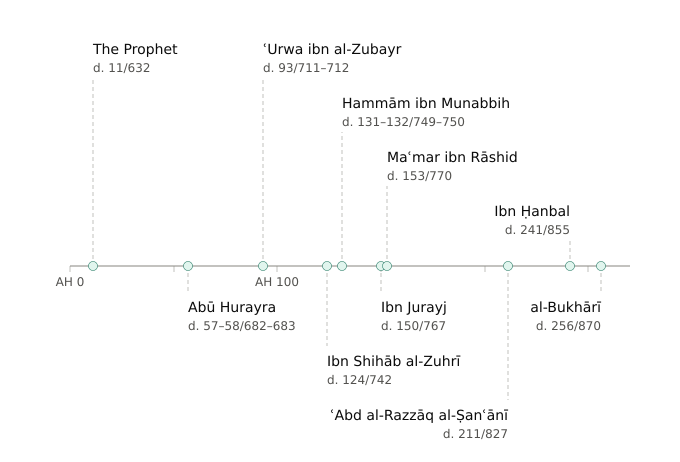
The Anatomy of a Hadith
“Convey (my teachings) to the people even if it were a single sentence […] But whoever lies about me deliberately, then let him prepare his abode in the Fire”.1
So says one of the most well-known ḥadīth attributed to Muḥammad. Indeed, the final clause (“But whoever […]”) is so well-attested that traditional Muslim scholars regard it as ‘mass-transmitted’; in their view it is epistemically certain that Muḥammad uttered these words.
But what do we mean by attestation? Each ḥadīth can be traced by its chain of transmission (isnād) as it passed through early Muslims from origin to recording. This particular one has dozens; the diagram below shows the one associated with the text (matn) above.
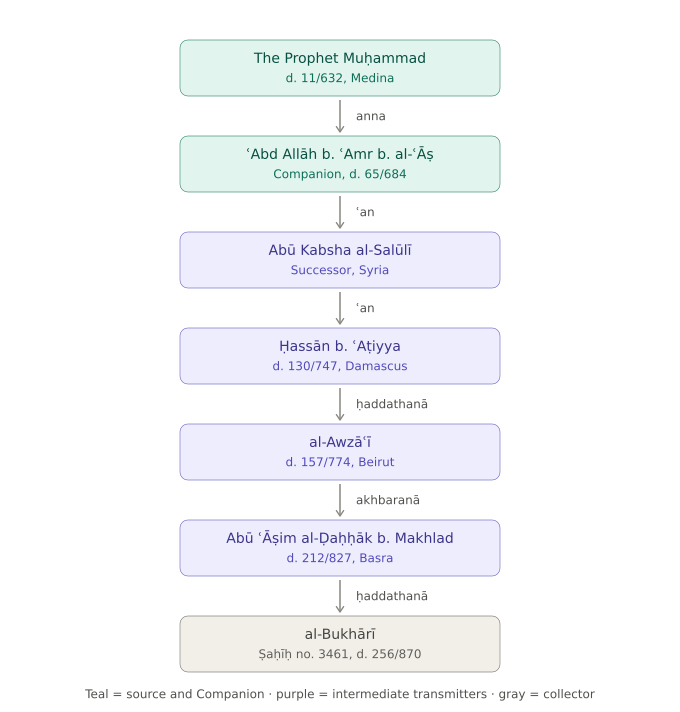
Our isnād begins with ʿAbd Allāh ibn Amr ibn al-Āṣ, a famous Companion (ṣaḥābī) of Muḥammad. Next along is a certain Abū Kabsha, a Successor (tābiʿī) - a member of the second generation of Muslims who met the Companions but not the Prophet. It then continued to be transmitted by learned Muslims, including the celebrated jurist al-Awzaʿī, until it reached al-Bukhārī almost two centuries later.
Traditional ḥadīth criticism revolves around the discipline of “biographical evaluation”, which involves assessing the reliability of the narrators in the isnād and the probability that they actually transmitted from one to the other. In this case, as all the narrators in this isnād were considered trustworthy by hadith critics and were known to have met, it was accorded the status of being authentic (ṣaḥīḥ) in the Islamic tradition.
The Controversy of Writing Hadith
Beyond serving as an example, this ḥadīth also touches upon a dilemma that troubled some early Muslims. On one hand, one ought to strive to spread the teachings of the Prophet. On the other hand, one would not want to mislead people about what he said, even if accidentally.
The possibility that others would confuse the Qur’ān, which was still being codified, and written ḥadīth, troubled some Companions so greatly that they forbade others from writing the ḥadīth they transmitted, including three of the principal Qur’ānic codifiers.2 A more general and prevalent concern still was that the mere presence of written ḥadīth would diminish the stature of the Qur’ān.3
Objections persisted well after the Qur’ān had been codified. Some are understandable even today. For example, the early Arabic script had not fully developed diacritics, which meant written words could not be reliably distinguished from one another without an understanding of the context, which required guidance from the author.4 Others make more sense in a deeply oral culture. Many early Muslims feared that a reliance on writing would dull one’s memory and render one more prone to making mistakes in its absence,5 or reduce comprehension.6 And there were more practical reasons to prefer memorisation. Besides widespread illiteracy, this was an age before paper, and writing material - typically papyrus or parchment - was difficult to come by.7
Despite the pervasiveness of such views, there was no consensus. The late Muḥammad Mustafa al-A’zamī assembled a list of 50 Companions, 49 Successors, and 87 from the generation succeeding the Successors who kept and transmitted ḥadīth in written form, or at least permitted others to do so from them.8 A famous example is the personal collection of ʿAbd Allāh ibn Amr ibn al-Āṣ, the Companion who we just met as a transmitter of the “lying ḥadīth”. The tradition holds that, with Muḥammad's consent, he compiled ḥadīth in a “book” named al-Ṣaḥīfah al-Ṣādiqah (“The Truthful Scroll”).9 So cherished was this collection to ʿAbd Allāh that we even hear that he kept it under his pillow.10
Much of this writing served not as a means of distribution but as aide-mémoire. Its utility in this regard was not lost on even those who championed memorisation. The use of private notebooks to assist in memory recall, known as ṣaḥīfas, was common early as the time of the Companions. Of course, many were intended to be temporary, and, out of fear of them falling into the wrong hands and being misunderstood, some authors ordered their notes to be destroyed upon their death.11 Tradition records a dying Successor calling for his books and erasing them, saying, “I'm afraid someone may get possession of them when I am dead and misconstrue them.“12
The Ṣaḥīfa of Hammām
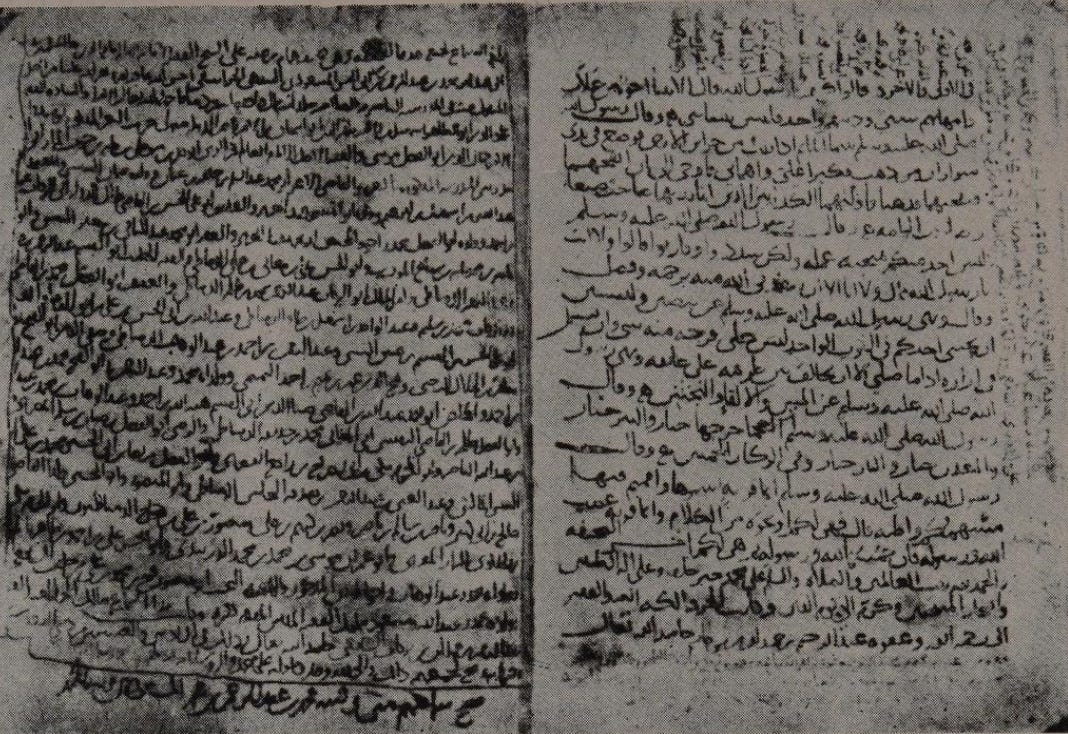
One ṣaḥīfa has remarkably survived, albeit as a copy. This is the ṣaḥīfa of Hammām ibn Munabbih, a Successor who was pupil to the Companion Abū Hurayra, himself a prolific transmitter of ḥadīth. Published in the 20th century, the ṣaḥīfa contains 138 ḥadīth with the short isnād Hammām → Abū Hurayra → The Prophet. Of these, 99 also appear in the much later collections of al-Bukhārī and his student Muslim ibn al-Ḥajjāj.13 In this way, the later ḥadīth collections incorporated earlier material that was already in circulation.
The ṣaḥīfa was preserved by Maʿmar ibn Rāshid, who received its contents from an elderly Hammām around 750.14 Maʿmar then transmitted the ṣaḥīfa to his student, ʿAbd al-Razzāq, who incorporated it into his own collection and through which it survives today.15 We shall soon return to this teacher-student duo, for they were two of the principal early ḥadīth compilers.
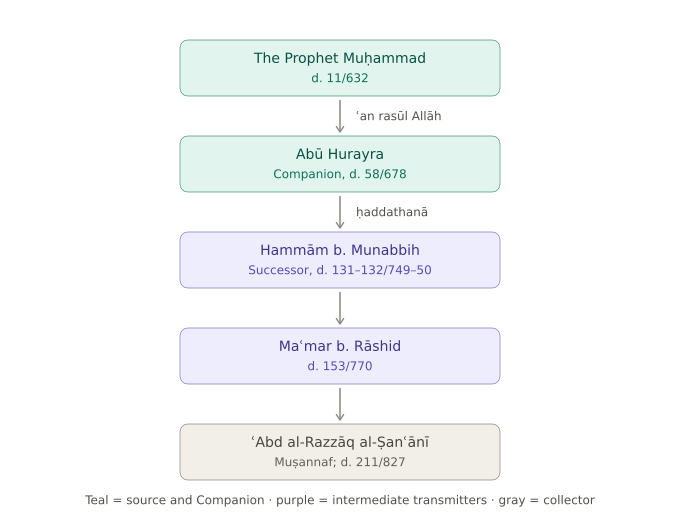
The full picture is more nuanced than “all writing was discouraged”. We are instead best served by the Greco-Roman distinction between personal notes (hypomnemata) that served as aide-mémoire and formal works intended for publication (syngrammata), first introduced to this field by Gregor Schoeler.16 The former gained more acceptance than the latter during the early period, but these forms were not wholly independent.
Hammām's saḥīfa is an illustrative case of a hypomnema later incorporated into a syngramma. This is a recurring theme with the earliest written records of ḥadīth. Though they may have ceased to exist as independent texts, their absorption into later, larger collections ensured their survival and allow for their reconstruction in the present day.
Transmission in Practice
In the early period, ḥadīth were primarily disseminated by the Companions and Successors in ad hoc responsa to creedal and legal questions. But around a century after the Prophet’s death, dissemination became more organised and conducted for its own sake. Students would attend the lectures of scholars and learn ḥadīth from them, often travelling far across the Muslim world to do so.17
Various modes of teaching existed. The simplest method was aural: the teacher would recite ḥadīth from memory to their students. As time passed, teachers increasingly read ḥadīth from their own hypomnemata and the students would read them back. In some cases, teachers would engage in dictation.18 Hearing hadith from a teacher was known as audition (samā‘), and transmitting from a teacher without having audited their lectures could expose a student to scathing criticism.19
To illustrate this, we turn to Ibn Jurayj, a famous jurist of Byzantine origin and a teacher of our friend ʿAbd al-Razzāq, who preserved Hammām’s saḥīfa. Through the accounts of Ibn Jurayj’s student, the historian al-Wāqidī, we glean several important insights.
[Al-Wāqidī:] I asked Ibn Jurayj about reading ḥadīth aloud to the ḥadīth scholar (muḥaddith).
He answered: Someone like you is asking something like that?! The scholars are in disagreement about notebooks (saḥīfa) which someone takes and says: “I am transmitting (uḥaddithu) what is in it” without having read it aloud, but if he has read it aloud, it is equal [to hearing it].20
The exchange demonstrates that Muslim scholars by Ibn Jurayj’s time deemed it perfectly acceptable for one to claim that they were ‘transmitting’ from a teacher by reading from a notebook - so long as one had read that notebook aloud to the teacher (i.e., within the framework of samā‘).
Al-Wāqidī also records an account from a scholar named Abū Bakr, who transmitted hadith to Ibn Jurayj:
[Abū Bakr:] Ibn Jurayj said [to me]: “Write me some of your good hadith!” [So] I wrote him 1,000 hadith and sent them to him. He neither read them to me, nor I to him.
[Al-Wāqidī:] Later I heard Ibn Jurayj transmitted many hadiths with the words: “Abū Bakr ibn Abī Sabra transmitted to us (ḥaddathanā).”21
We learn three things here. First, the bulk exchange of written hadith was occurring by the generation after the Successors. Second, phrases which imply oral transmission at face value can encompass written transmission too. And though Ibn Jurayj himself noted that some frowned upon transmitting without samā‘, he was clearly comfortable doing so himself.
Evidently, then, there was a shift in attitudes among Muslim scholars between the time of the Companions and that of Ibn Jurayj: no longer were the hypomnemata restricted to temporary aide-mémoires. But not everyone was pleased with the winds of change. Al-Awzaʿī, who we met earlier as a transmitter of the “lying ḥadīth”, lamented:
This knowledge [of ḥadīth] was a noble thing when they would acquire it and discuss it among themselves [verbally]. Then when it came into books, its light disappeared, and it fell into the hands of those who were not worthy of it.22
The Caliph and the Scholar
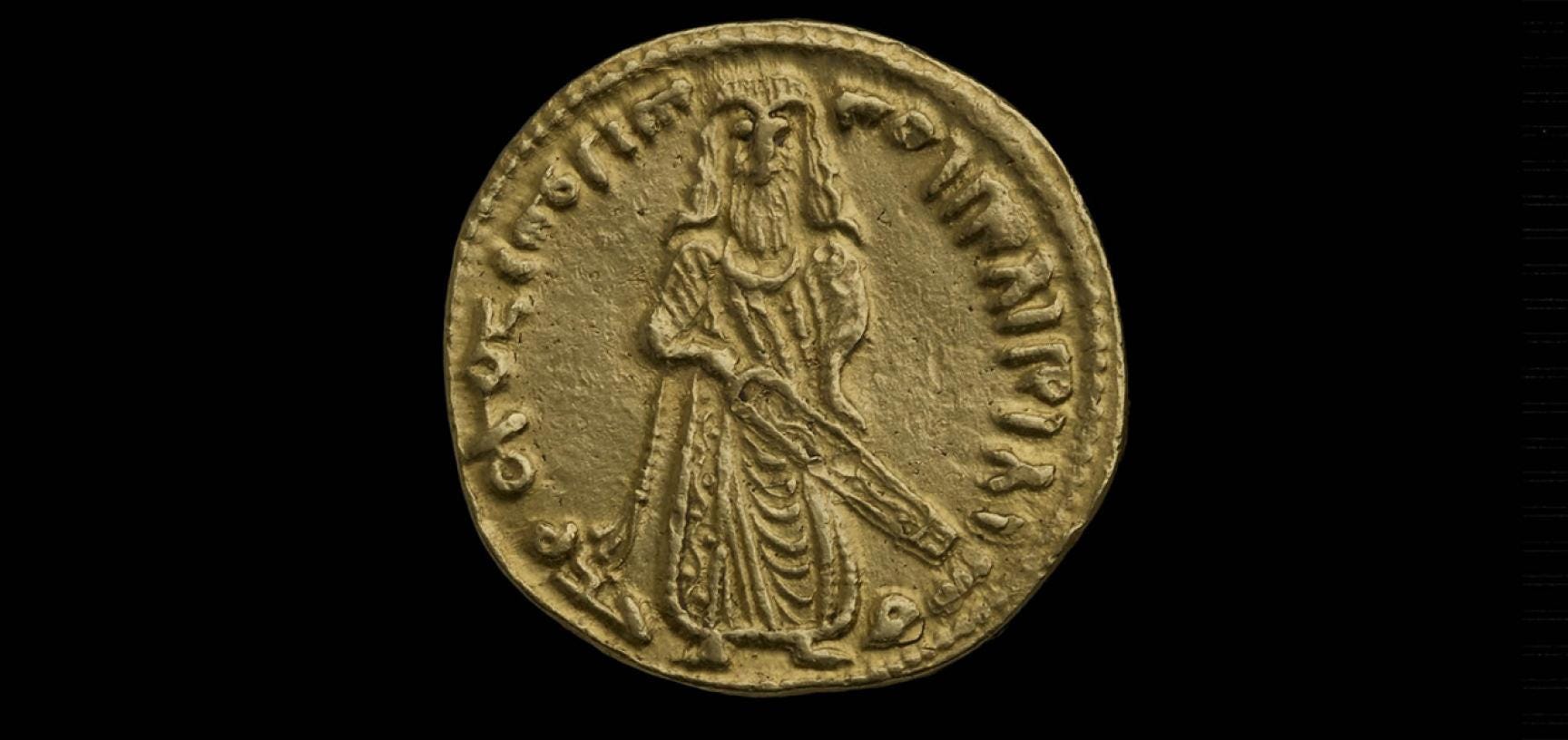
What drove this shift in attitude? Central to answering this puzzle is the Successor jurist Ibn Shihāb al-Zuhrī, a contemporary of Ibn Jurayj and the star scholar at the court of the Umayyad caliphs.
Al-Zuhrī spent his youth in Medina, the second-holiest city in Islam. It was here that Muḥammad founded the first Muslim state after fleeing persecution in Mecca. Many of the local residents came to support him, and were henceforth known as the Anṣār (“helpers”). They bore witness to many of the pivotal events in Muḥammad’s life, and their Successor descendants filled the city. Among those who attended their gatherings was a young al-Zuhrī, eager to acquire religious knowledge.23
During a trading mission to the Umayyad court in Syria, al-Zuhrī entered the service of the caliph ʿAbd al-Malik,24 who himself had engaged in scholarly pursuits in Medina.25 Al-Zuhrī quickly became a distinguished court scholar. On instruction from ʿAbd al-Malik, he returned to Medina to learn ḥadīth from the learned descendants of the Anṣār.26 Al-Zuhrī also accompanied ʿAbd al-Malik to Jerusalem, where he recounts the caliph delivering an ominous and prescient sermon:
I heard ‘Abd al-Malik in Jerusalem exhorting the people before the outbreak of the plague which caused him to leave for [the palace of] al-Muwaqqar, with these words: “The knowledge [of ḥadīth] will soon pass away, so let anyone having knowledge reveal it without exceeding with regard to it the due limit [or without zealotry] and without ignoring [or neglecting] it.”27
Al-Zuhrī remained at the court during the reigns of ʿAbd al-Malik’s successors. One of these was the pious ʿUmar II who, like ʿAbd al-Malik, engaged vigorously with the Medinese elite and served as governor of the city for several years.28 Anecdotes abound about his urgency for codifying ḥadīth. For instance, we hear him writing to a Medinese scholar:
Look to whatever there is of the ḥadīth of the Messenger of God - may God bless him and grant him peace - and write it down, for I fear the effacement of knowledge and the passing away of the scholars. And accept nothing but the ḥadīth of the Prophet, may God bless him and grant him peace […]29
But the mission of ʿUmar II was cut short by his death merely two years into his reign. Several years later, Hishām - a son of ʿAbd al-Malik - acceded to the caliphate, and made al-Zuhrī tutor to his children.30 An Umayyad prince required a religious education, and Hishām would not skimp on ḥadīth. As al-Zuhrī tells us,
Sālim, the imperial secretary of Hishām, met me and said to me, “The Commander of the Faithful commands you to commit your ḥadīth to writing for his sons”.
I said, “Even if he were to ask about two ḥadīth, one following right after the other, I could not do so. Rather, send me a scribe or two, for there is rarely a day that people do not come to me asking about something that I had not been asked about the day before.” He then sent me two scribes, and they spent a year with me.31
Like his contemporary al-Awzaʿī, al-Zuhrī did not approve of the writing of ḥadīth. Yet he could not in good conscience forbid ordinary people from writing down ḥadīth from him whilst allowing the caliph’s court and children to do exactly that. And so in a famous narration, he exclaimed:
We were unwilling to commit knowledge [of ḥadīth] to writing until these rulers forced us to do it. Now our view is that we ought not forbid any Muslim from doing it.
As related by one of al-Zuhrī’s contemporaries, the public were all but willing to take advantage of this opportunity:
When al-Zuhrī left Hishām’s palace, he entered the mosque, leaned against one of his pillars, and cried out, “Seekers of ḥadīth!” When they gathered around him, he said, “I’ve withheld a matter from you, but I permit it for the Commander of the Faithful’s sake despite myself. Come now and write.” People then wrote down [the ḥadīth] from that day on.32
From Hypomnemata to Syngrammata
Al-Zuhrī did not appear to compose any works of ḥadīth for publication. And not only did he eschew syngrammata, but his use of hypomnemata was also limited; we hear that he had to borrow writing material from another scholar and rubbed out ḥadīth after having memorised them.33
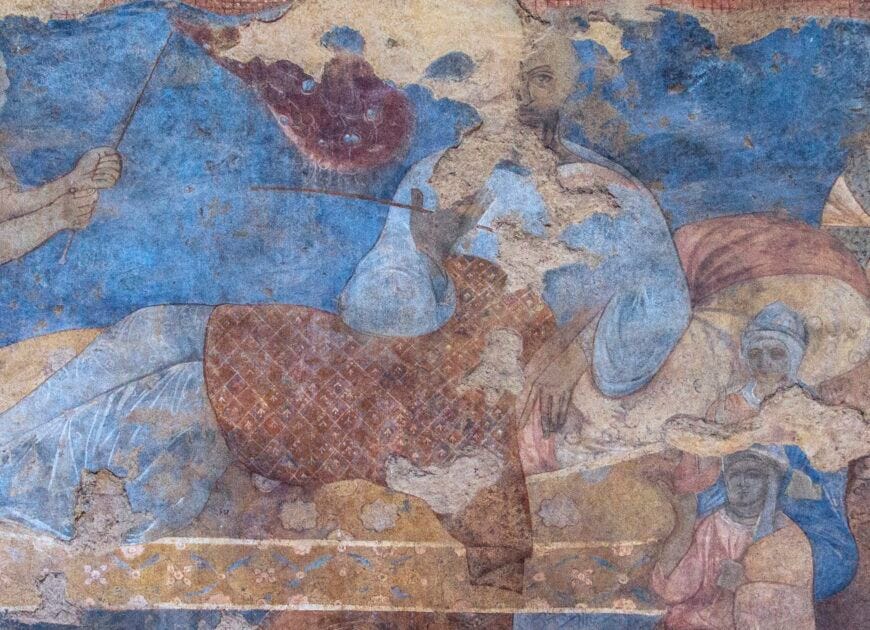
Among his students was Maʿmar ibn Rāshid, who we last met as a transmitter of Hammām’s saḥīfa. Present at the Umayyad court after al-Zuhrī’s death, Maʿmar witnessed a tragic sight:
We used to think that we had learned a great deal from al-Zuhrī until [caliph] al-Walīd II was assassinated and, lo, notebooks full of al-Zuhrī’s knowledge were carried out by beasts of burden from [the caliph’s] storehouses.34
An ignoble end to the court dictations of al-Zuhrī’s teachings, accumulated over a staggering 40 years.35 Maʿmar does not specify where the records were taken but a positive fate seems unlikely, for the assassination of al-Walīd II triggered a civil war which soon led to the fall of the Umayyads and their usurpation by the ʿAbbāsid dynasty.
Fortunately, none of this prevented al-Zuhrī’s voluminous corpus from surviving. It appears his students rescued some of the material; one scholar is recorded as having seven boxes of Zuhrī manuscripts that were only seen after the scholar’s death.36 More importantly, thanks to his entourage of students recording his ḥadīth independently of the imperial scribes, thousands of legal responsa and ḥadīth attributable to al-Zuhrī can be found in today’s collections. In fact, two of the most famous transmitters of al-Zuhrī were none other than Maʿmar himself and his student ʿAbd al-Razzāq. Once again, we observe hypomnemata being absorbed into later syngrammata.
The “Book” of ʿUqayl ibn Khālid
However, given the size of the Zuhrī corpus, one might expect at least some hypomnemata to have survived the Umayyad collapse independently of later syngrammata. In 1967, the papyrologist Nabia Abbott published a fascinating manuscript from exactly this category.
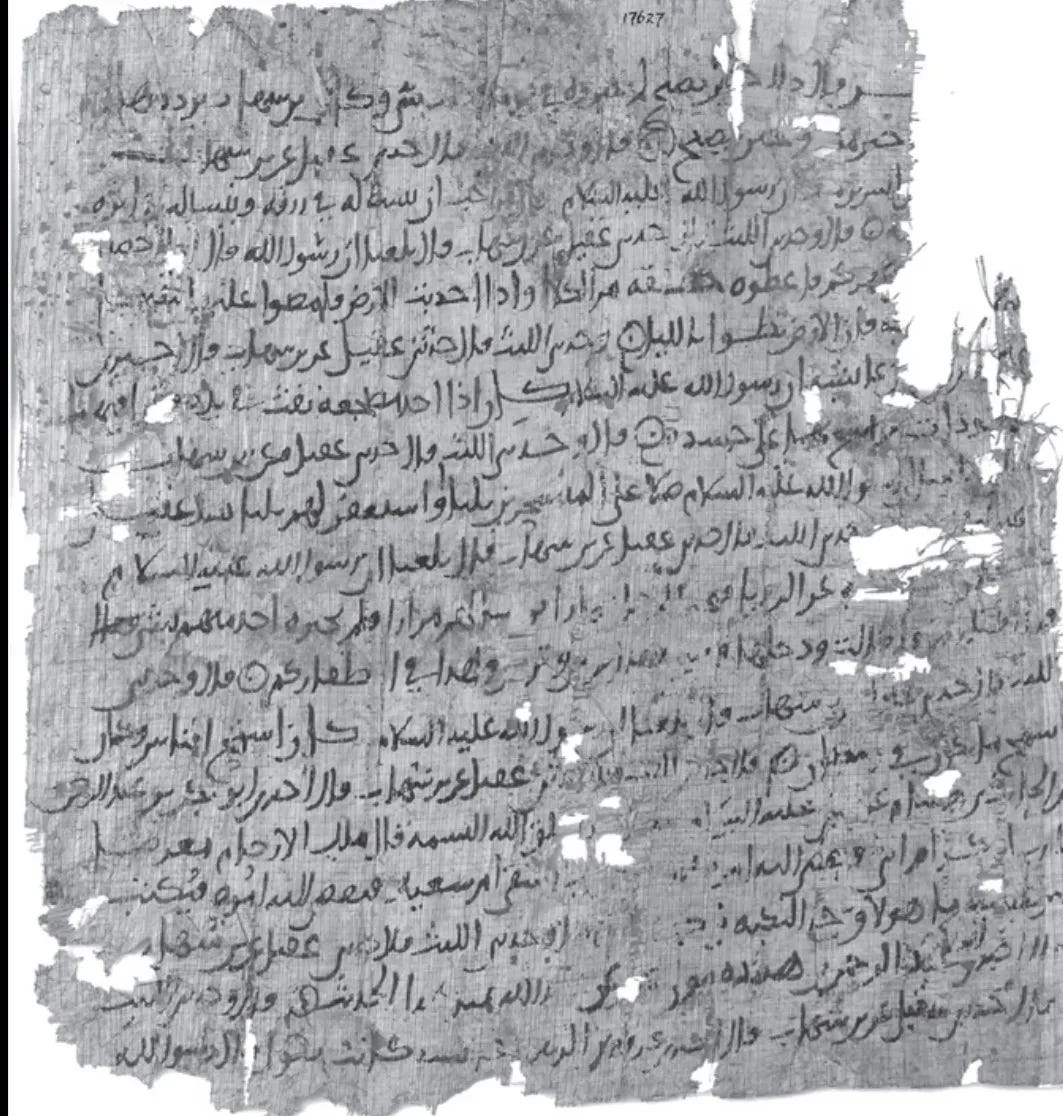
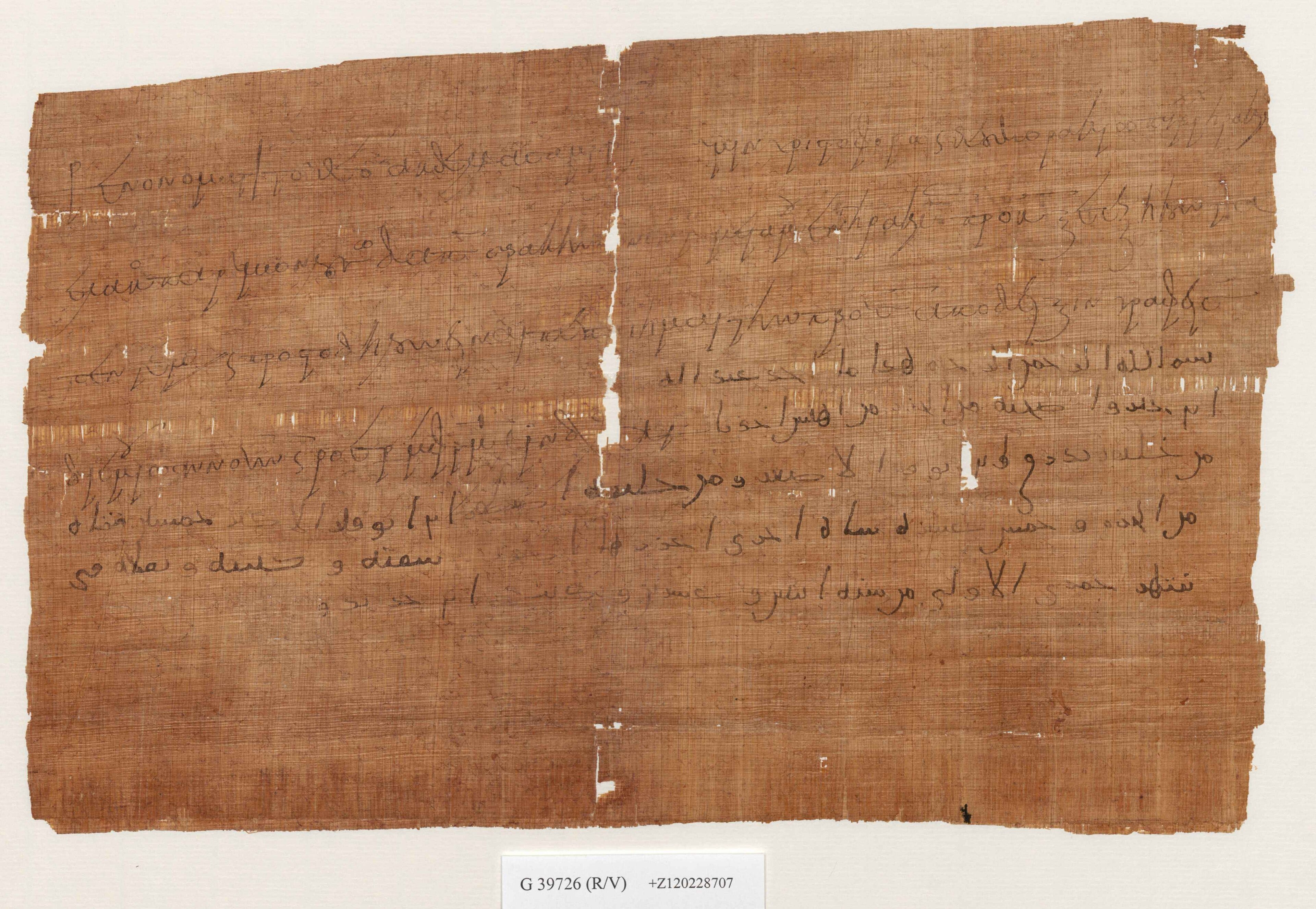
This is Oriental Institute no. 17627, a papyrus copy of several Zuhrīte ḥadīth written down and transmitted by ʿUqayl ibn Khālid, a scribe and companion of al-Zuhrī at the Umayyad court. He spent his final years in Egypt,37 where he came into contact with the Egyptian scholar al-Layth ibn Saʿd. The Islamic tradition records that al-Layth possessed ʿUqayl’s “book”; this papyrus is a fragment of one of its copies.38
Despite having met al-Zuhrī in person, much of al-Layth’s Zuhrīte material is transmitted through ʿUqayl. Thus the isnād of al-Zuhrī → ʿUqayl → al-Layth appears frequently in the extant ḥadīth collections.39 Abbott notes that of the five ḥadīth in the manuscript which have an unambiguous isnād going back to the Prophet, four have counterparts in the later ḥadīth collections, whether similar or identical.40
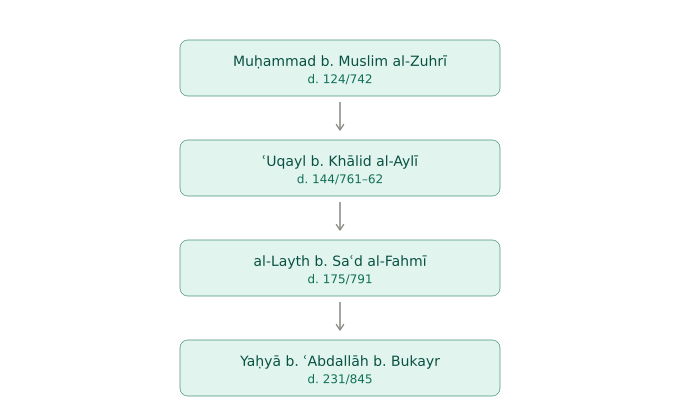
It may be tempting to see this as almost identical to Hammām’s ṣaḥīfa. There is a key difference, however. Our papyrus is evidence of an intermediary stage where hypomnemata existed without physically being part of a larger syngramma, but were nonetheless distributed to a small audience. It is a direct copy of ʿUqayl’s original “book”, rather than a copy of the “book” as preserved in a later published work.
The Genesis of a New Genre
Earlier, we read how Maʿmar witnessed al-Zuhrī’s notebooks being taken from the caliphal palace as the Umayyad state descended into its final civil war. This poignant scene took place at the end of a zenith at the Umayyad court; in fact, Maʿmar’s principal teacher here was al-Zuhrī, and he heard the scholar’s ḥadīth through samā‘.
As violence spread across Syria, Maʿmar made the long journey south to Yemen, where he eventually took the local ʿAbd al-Razzāq as his student.41 ʿAbd al-Razzāq studied under Maʿmar for some seven years until latter’s death. He also studied under prominent visiting scholars such as Ibn Jurayj, the jurist we met when examining the nature of transmission.42 ʿAbd al-Razzāq’s time under Maʿmar was remarkably fruitful. Among the most interesting material he received from Maʿmar was al-Zuhrī’s lengthy reports on prophetic biography,43 as well as Maʿmar’s books.44
All this was incorporated into ʿAbd al-Razzāq’s magnum opus: his muṣannaf, which can be roughly translated as “[book] organised topically”. The muṣannaf should not be thought of as a pure “ḥadīth collection”, but rather a legal reference which includes ḥadīth as evidence.45 It arranges over 18,00046 ḥadīth and legal responsa from early Muslims in a topical fashion that suited jurists who had to contend with legal questions on a daily basis.47 Such a gargantuan work was likely enabled by the spread of paper in the Islamic world around the time of its compilation.48 Unsurprisingly, the legal responsa dwarf the number of ḥadīth. For example, that prophetic ḥadīth only comprise 14% of the narrations from Ibn Jurayj in the muṣannaf.49
Excerpt from the Muṣannaf : “Chapter on Whether or not One Should Wipe One’s Head with the Water Remaining from One’s Hands”
Successor responsum: ʿAbd al-Razzāq → Ibn Jurayj: 'I said to ʿAṭāʾ [ibn Abī Rabāḥ], "Is it with the water left over from your face that you wipe your head?" and he said, "No, I put my hands in the water and wipe with them, and I do not shake the water off them or wait for them to dry. In fact I try to keep the hairs [on my hands and arms] wet."'
Prophetic ḥadīth with incomplete isnād: ʿAbd al-Razzāq → Ibn Jurayj → ʿAjlān: The Prophet used to wipe his ears along with his face one time and wipe his face. Then he would put his palms in the water and wipe his head from front to back to the back of his neck, then his temples. Then he would wipe his ears once — all of this with what water he had in his hand from that one wipe.
How should we classify the muṣannaf under our framework? It is certainly the first syngramma we have encountered, but it is also one composed with hypomnemata as a significant primary source - whether that be Hammām’s ṣaḥīfa or Maʿmar’s semi-private books. Approximately 32% of its material is transmitted from Maʿmar, and 29% from Ibn Jurayj. Of the material from Maʿmar, 28% is from al-Zuhrī.50
A Third Mode of Transmission
ʿAbd al-Razzāq preserved his source works meticulously. In the muṣannaf ‘s section on prophetic biography (Kitāb al-Maghāzī), 94% of the reports cite Maʿmar as a source.51 In 2014, Sean Anthony was able to use the Kitāb al-Maghāzī to reconstruct and publish Maʿmar’s work of prophetic biography, now considered one of the earliest biographies of Muḥammad.
Maʿmar cites al-Zuhrī as a source in the Kitāb al-Maghāzī for 69% of his reports. For his part, al-Zuhrī cites the Successor ʿUrwa ibn al-Zubayr for 17% of his reports.52 ʿUrwa was a famed Medinese scholar and a scion of a prestigious lineage; he was nephew to Muḥammad’s wife, ʿĀʾisha, whom he visited freely,53 as well as the son of one of the earliest Muslims.54 To the envy of his peers, he was thus among the best placed to narrate the events of Muḥammad’s life. He also rubbed shoulders with other Medinese elites, studying alongside the future caliph ʿAbd al-Malik.55
ʿAbd al-Malik maintained a healthy respect for ʿUrwa,56 even after ʿUrwa’s brother proclaimed himself caliph and almost toppled the Umayyads. The pair reconciled in its aftermath, and ʿAbd al-Malik asked ʿUrwa a series of questions on prophetic biography. Their subsequent exchange of letters was preserved in later collections through multiple isnāds, including multiple through al-Zuhrī as well as ʿUrwa’s own son.57
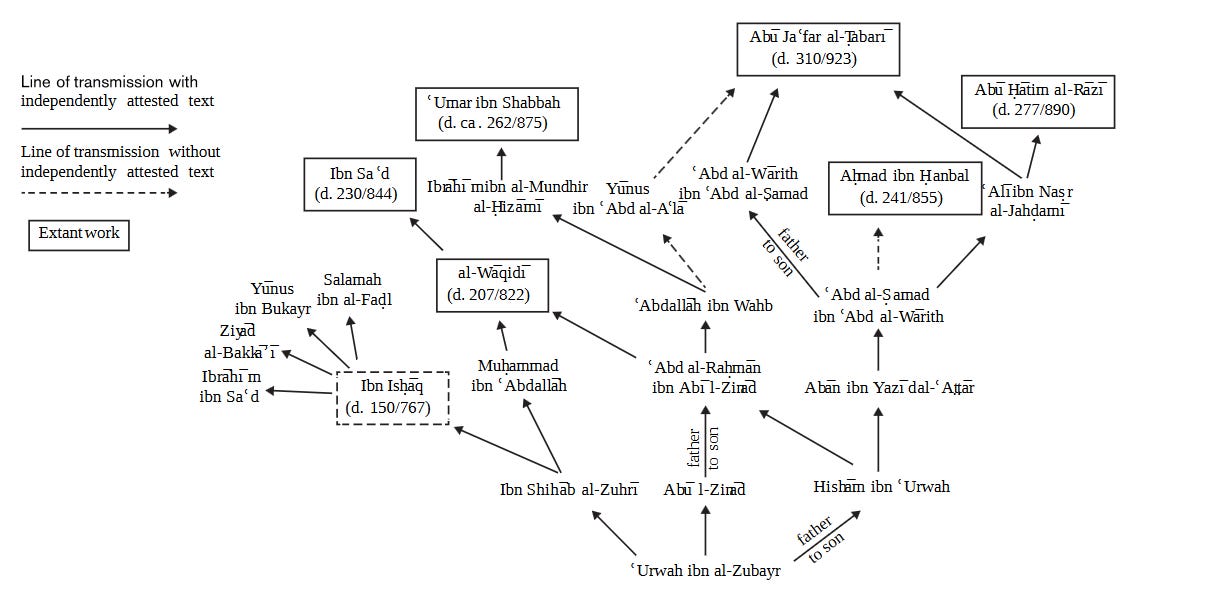
This is an interesting case of texts that sit outside of our hypomnemata-syngrammata framework. They are not the aide-mémoire or lecture notes typical of hypomnemata, but letters to the court were a form of private and intimate correspondence rather than a formal, published work.
It is most likely that ʿUrwa did not compose a written work of prophetic biography for public consumption, and that he orally transmitted his other biographic material.58 This would include the ʿUrwa material from al-Zuhrī in the Kitāb al-Maghāzī. Given that they both relate ostensibly the same story through different modes of transmission, we might expect Urwa’s letters and his material in the Kitāb al-Maghāzī to be similar. And by comparing the text of these recensions, it transpires that their general outline is identical. Their level of detail varies, but these may well be attributable to ʿUrwa tailoring the content for different audiences.59
Towards al-Bukhārī and Beyond
The ninth century saw the emergence of the Shāfiʿīte and Ḥanbalite schools of law. Whilst hitherto the existing schools of law had relied heavily on the precedent of the Companions and Successors, these schools placed a greater emphasis on prophetic practice. Moreover, ḥadīth scholars increasingly needed to compare the isnāds of different ḥadīth to study the reliability of transmitters. All this was a powerful impetus for the development of dedicated, written ḥadīth collections.60
It was in this context the musnad emerged: a form of collection solely containing ḥadīths organised by isnād. The largest musnad was that of Ibn Ḥanbal, the founder of the Ḥanbalite school, containing an eyewatering 27,000 ḥadīth. But the musnad authors made no guarantee that their contents were “authentic” as judged by the standards of the time. It was al-Bukhārī - a contemporary of Ibn Ḥanbal - and his student, Muslim ibn al-Ḥajjāj, who developed the first collections comprised purely from “authentic” (ṣaḥīḥ) ḥadīth. Known respectively as Ṣaḥīḥ al-Bukhārī and Ṣaḥīḥ Muslim, these collections are known to and revered by many Muslims today.61
Contrary, then, to the popular misconception, al-Bukhārī did not write down ḥadīth “for the first time”. He was, however, the first to compile a written collection of ḥadīth that he felt met an “authentic” standard, and he did so in an environment where both written and oral transmission were widespread. Around 150 years later, by the eleventh century, the value placed on memorisation had declined. One of the prominent scholars of this period, al-Bayhaqī, tells us:
The reliance in our times is not upon the narrators (i.e., their memory), but rather, the scholars of hadith and writers [of ḥadīth] and those whose reliability and honesty is known in writing down the name of the listeners […] some have become lenient in [accepting] samā‘ from those who do not have a good recollection of their ḥadīth […] this is as long as the recitation is from their original copies that they have heard [from their teachers].
Al-Bayhaqī concludes by noting how the great codification of ḥadīth had been completed:
It is not possible that a single ḥadīth escapes all of [the collections]. So, whoever comes today with a ḥadīth that is not found in any of them, it will not be accepted from him. […] The purpose of narrating it and acquiring samā‘ of it is so that the ḥadīth remains connected […] and that this blessing which the Muslim community remains until the Day of Resurrection, out of respect for our chosen Prophet, may peace and blessings be upon him.62
Conclusion
It is wrong to pinpoint the “writing” of ḥadīth to a specific date. Writing occurred from the very beginning, but its form, function and prevalence evolved over time. What initially began as private notes that enabled oral memorisation and transmission eventually transitioned to full-fledged published works consisting of thousands of ḥadīth. Pressure from the Umayyad caliphs, developments in Islamic law and the increasing need to verify ḥadīth seem to have accelerated this process.
Importantly, these published works stood on the shoulders of giants - countless notes and semi-private books made their compilation and ultimate preservation possible. By the time we reach al-Bukhārī in the 9th century, the acceptance of written transmission was complete. In the words of al-Bukhārī himself:
“The book is more accurate in the eyes of the scholars […] in the case of a difference, the version in the book will be accepted as accurate.”63
Bibliography
Abbott, Nabia. 1967. Studies in Arabic Literary Papyri, II: Qurʾānic Commentary and Tradition. OIP 76. Chicago: University of Chicago Press.
al-Aʿẓamī, Muhammad Mustafa. 1978. Studies in Early Hadith Literature: With a Critical Edition of Some Early Texts. Indianapolis: American Trust Publications.
al-Aʿẓamī, Muhammad Mustafa. 2002. Studies in Ḥadīth Methodology and Literature. Rev. ed. Kuala Lumpur: Islamic Book Trust.
Anthony, Sean W., ed. and trans. 2014. The Expeditions: An Early Biography of Muḥammad, by Maʿmar ibn Rāshid, according to the recension of ʿAbd al-Razzāq al-Ṣanʿānī. Library of Arabic Literature. New York: New York University Press.
Anthony, Sean W. 2020. Muhammad and the Empires of Faith: The Making of the Prophet of Islam. Oakland: University of California Press.
Boekhoff-van der Voort, Nicolet. 2011. "The Kitāb al-maghāzī of ʿAbd al-Razzāq b. Hammām al-Ṣanʿānī: Searching for Earlier Source-Material." In The Transmission and Dynamics of the Textual Sources of Islam: Essays in Honour of Harald Motzki, edited by Nicolet Boekhoff-van der Voort, Kees Versteegh, and Joas Wagemakers, 27–47. Leiden: Brill.
Brown, Jonathan A. C. 2017. Hadith: Muhammad’s Legacy in the Medieval and Modern World. 2nd ed. London: Oneworld.
Chati, Muadh. 2023. An Introduction to the Science of the Noble Hadith.
Cook, Michael. 1997. "The Opponents of the Writing of Tradition in Early Islam." Arabica 44 (4): 437–530.
Görke, Andreas, and Gregor Schoeler. 2005. "Reconstructing the Earliest sīra Texts: The Hiǧra in the Corpus of ʿUrwa b. al-Zubayr." Der Islam 82 (2): 209–220.
Hamidullah, Muhammad, ed. 1979. Ṣaḥīfah Hammām ibn Munabbih. Translated by Muhammad Rahimuddin. Paris: Centre Culturel Islamique.
Lecker, Michael. 1996. “Biographical Notes on Ibn Shihāb al-Zuhrī.” Journal of Semitic Studies 41 (1): 21–63.
Motzki, Harald. 1991. "The Muṣannaf of ʿAbd al-Razzāq al-Ṣanʿānī as a Source of Authentic Aḥādīth of the First Century A.H." Journal of Near Eastern Studies 50 (1): 1–21.
Motzki, Harald. 2002. The Origins of Islamic Jurisprudence: Meccan Fiqh before the Classical Schools. Translated by Marion H. Katz. Leiden: Brill.
Schoeler, Gregor. 2006. The Oral and the Written in Early Islam. Translated by Uwe Vagelpohl, edited by James E. Montgomery. London: Routledge.
Notes
Schoeler (2006), p. 118. These were Zayd ibn Thabit, Abd Allah ibn Masud and Abu Musa al-Ash’ari.
Cook (1997), pp. 491-492.
Brown (2017), p. 26.
Chati (2023), pp. 54-55.
Schoeler (2006), p. 118.
Chati (2023), p. 41.
al-Azami (1978), pp. 34-106.
Ibid, pp. 43-44.
Chati (2023), p. 51.
Brown (2017), pp. 26-27.
Cook (1997), p. 479.
Hamidullah (1979), p. 79.
Anthony (2020), p. 141.
Hamidullah (1979), pp. 66-67.
Schoeler (2006), pp. 46-47. Schoeler describes parallels with how material was transmitted in the Alexandrian school of philosophy.
Chati (2023), pp. 63-64.
al-Aʿẓamī (1978), pp. 186-192.
Brown (2017), pp. 41-42.
Motzki (2002), p. 279.
Ibid.
Chati (2023), p. 57.
Anthony (2020), pp. 132-133.
Ibid.
Ibid, p. 95
Ibid, p. 133.
Lecker (1996), p. 48.
Anthony (2020), p. 130.
This is narrated in Sahih al-Bukhari at the beginning of the chapter on “How knowledge will be taken away” (باب كَيْفَ يُقْبَضُ الْعِلْمُ).
Anthony (2020), p. 140.
Ibid, p. 139.
Ibid.
Ibid, p. 146.
Ibid.
Abbott (1967), pp. 181-182.
Ibid.
Anthony (2020), p. 143.
Abbott (1967), p. 168.
Ibid.
Ibid, p. 173.
Anthony (2014), pp. xxv-xxvi.
Motzki (1991), p. 5.
Anthony (2014), p. xxvii.
Motzki (1991), p. 5. The example given is Maʿmar’s al-Jāmiʿ, which was incorporated into ʿAbd al-Razzāq’s musannaf.
Brown (2017), p. 30.
Motzki (1991), p. 3.
Brown (2017), p. 28.
Chati (2023), p. 78.
Motzki (2002), p. 291.
Motzki (1991), p. 3.
Boekhoff-van der Voort (2011), p. 29.
Ibid, pp. 31-32.
Anthony (2020), p. 95.
Görke & Schoeler (2005), p. 220.
Anthony (2020), p. 95.
Abbott (1967), p. 21.
See Anthony (2020), pp. 102-127 for an English translation.
Ibid, p. 98.
Görke & Schoeler (2005), pp. 219-220.
Brown (2017), pp. 31-32.
Ibid.
Chati (2023), pp. 100-101.
al-Aʿẓamī (2002), p. 60.